Complete Guide to Empty Aerosol Cans: Types, Sizes, Materials and Applications
September 24, 2026
Autor
A través de un equipo técnico profesional, brindamos a nuestros clientes recomendaciones específicas para la selección de equipos y un servicio posventa integral, ganándonos así la confianza y el reconocimiento de nuestros clientes.
Sarah M.
Empty Aerosol Cans represent unfilled containers you purchase for commercial filling and branding. Your choice directly impacts product performance, regulatory compliance, brand image, and total project cost. Working with a trusted supplier proves essential. SiHaiPack operates as a reputable empty aerosol can manufacturer, providing both standard and customized can solutions for your specific needs.
Key Takeaways
Select a necked-in can to save metal and lower shipping costs. Choose a straight-walled can for more branding space and a premium shelf look.
Pick aluminum for lightweight, premium personal care products. Choose tin-plated steel for durable, cost-effective industrial and household chemicals.
Match the internal lining to your product's chemistry. Use epoxy for cosmetics, phenolic for strong solvents, and special coatings for aggressive formulas.
Main Types of Empty Aerosol Cans
You will encounter two leading families of aerosol tin can types on the market. Each family serves distinct filling lines and product categories. Understanding these differences helps you match the container to your formulation and brand goals.
Necked-In vs. Straight-Walled
Necked-in cans feature a narrowed top and bottom. This design saves metal and reduces shipping weight. The necked-in profile also accepts standard valve cups without extra tooling. Straight-walled cans keep a constant diameter from top to bottom. They offer a larger printable surface and a cleaner label area. Straight-walled cans often suit products that need full-body graphics or a premium shelf presence.
Your choice between these two shapes affects filling speed, valve seating, and pallet efficiency. Necked-in cans stack more tightly and lower freight costs. Straight-walled cans give your design team more room for branding. Both formats work with the common top opening. This opening standard determines which valves and actuators you can use. Verify this dimension before you commit to a can order.
Specialty Can Formats
Specialty formats extend beyond the standard cylindrical can. Bag-on-valve (BoV) designs separate the product from the propellant inside a sealed pouch. This separation supports food applications. You can use BoV for cooking sprays with food-safe propellants and better coverage. Whipped toppings benefit from consistent texture without flavor contamination. Specialty condiments gain extended shelf life. Beverage applications also use BoV for innovative delivery systems in functional drinks. Food products rely on BoV to guarantee freshness and reliable dispensing, as seen in whipped cream and cooking sprays.
Pistol and twist-lock designs serve other niches. Pistol cans fit ergonomic grips for targeted spraying. Twist-lock cans allow consumers to lock the actuator and prevent accidental discharge. These formats appear in personal care, household, and industrial lines.
Personal care brands favor aluminum for its lightweight, sleek feel. Aluminum supports 6–9 color offset printing, embossing, and debossing for a premium look. Steel cans are durable and cost-effective, commonly used for industrial and household chemical products. Common personal care applications for empty aerosol cans include sunscreen and spray tan, hairspray, dry shampoo, deodorant, perfume, facial and body mists, and body lotion. Each application demands a specific valve, can dimension, and internal lining. Match these elements early to avoid reformulation later.
Standard Sizes and Capacities
Common Milliliter and Ounce Ranges
Empty Aerosol Cans come in a range of capacities. Smaller cans often serve travel-size and single-use personal care items, with the TSA 3-1-1 rule capping carry-on containers at 100 ml. The TSA 3-1-1 rule sets the carry-on liquid limit at 3.4 oz / 100 ml per container. This limit applies to aerosol sprays. Travelers may bring one quart-sized bag of liquids, aerosols, gels, creams, and pastes. Each container must stay within the 3.4 oz (100 ml) cap. A 200 ml can does not meet this rule for carry-on use. You should reserve smaller formats for checked baggage or domestic lines. Larger 405 ml and 520 ml cans serve full-size retail products. These sizes reduce filling cost per unit and lower packaging waste.
Diameter and Height Options
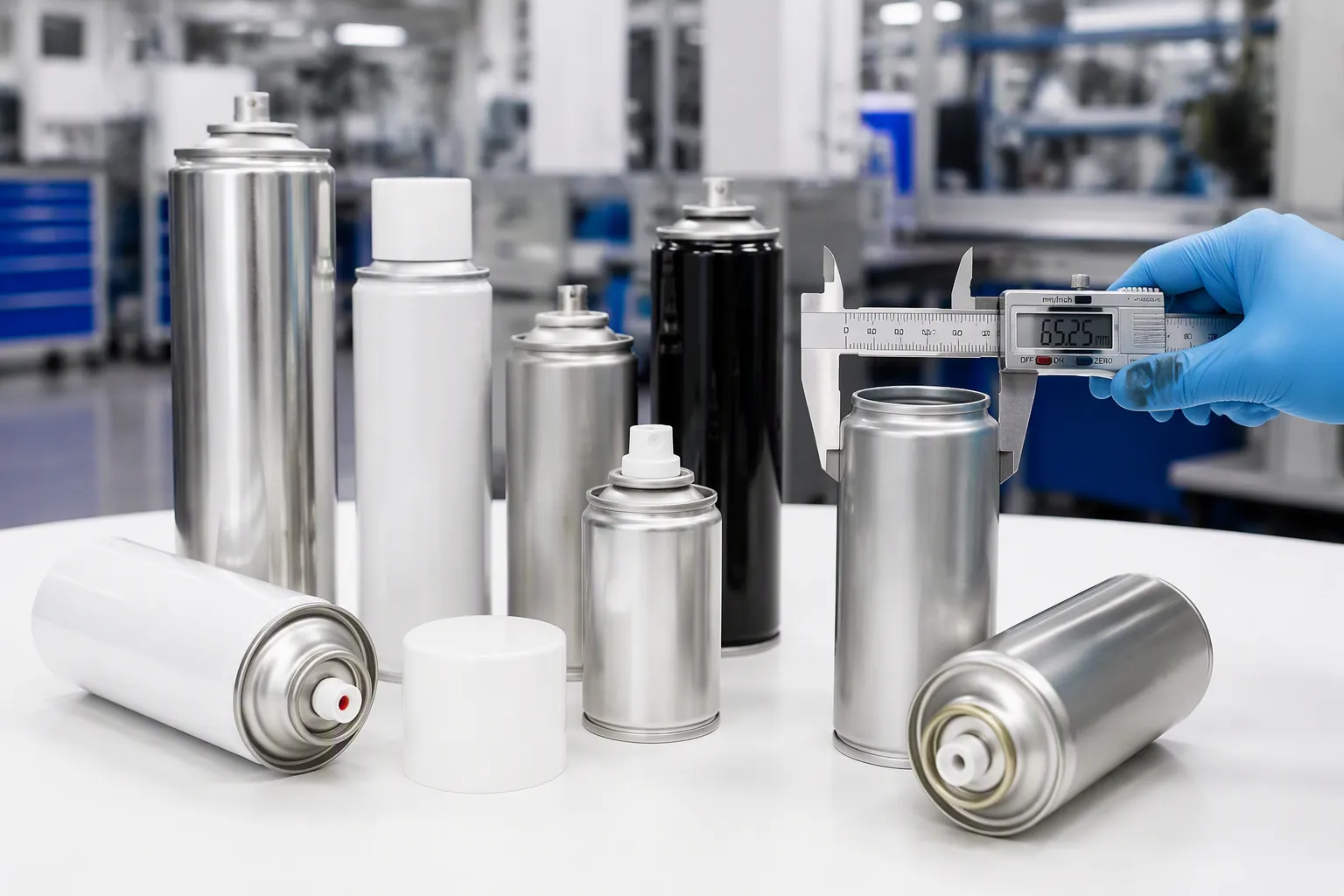
You will find typical aerosol can sizes with diameters from 50 mm to 66 mm and heights from 143 mm to 225 mm. Diameter codes help you match valves and caps. The 202 code measures 52 mm and serves as the most ubiquitous diameter for household aerosol cans. The 205 code measures 57 mm and grows more common each year. The 211 code measures 65 mm and fits spray paints, industrial products, and large-format food sprays.
Diameter Code
Diameter (mm)
Common Uses
202
52 mm
Personal care and household items
205
57 mm
Growing standard for many lines
211
65 mm
Spray paints and industrial products
A 400 ml can shows how height and diameter trade off. You can choose Diameter 50 × 225 mm, Diameter 53 × 205 mm, Diameter 59 × 169 mm, or Diameter 66 × 143 mm. Each option holds 405 ml full capacity and 300 ml liquid gas capacity. Wider cans run shorter. Taller cans run narrower. This flexibility lets you fit shelf space, pallet layout, and filling line constraints.
Materials and Coatings
Aluminum vs. Tin-Plated Steel
You will choose between two base metals for Empty Aerosol Cans: aluminum and tin-plated steel. Both materials are fully recyclable. Aluminum offers a lightweight body and a sleek feel. Tin-plated steel provides a durable, cost-effective option for industrial and household chemical products.
The barrier properties differ between these two materials. Tinplate's steel core blocks oxygen, light, and moisture completely. The tin coating sacrificially corrodes to protect the steel underneath. Aluminum blocks light, oxygen, and moisture effectively. However, aluminum relies more heavily on internal coatings to prevent interaction with acidic or salty contents. For oxygen-sensitive products like tomato paste or certain beers, the absolute barrier of tinplate aerosol packaging proves critical.
Internal Linings and External Coatings
Internal linings protect your product from reacting with the metal. Epoxy-based coatings are the most common choice for aluminum cans. They offer strong adhesion and broad chemical resistance. To address BPA concerns, the industry now widely uses BPA-NI alternatives based on acrylics, polyesters, or vinyl-based polymers.
Material
Description
Epoxy resin
Most common; excellent chemical resistance; suitable for cosmetics, household cleaners
Polyester
High temperature and corrosion resistance; used in industrial aerosol cans
Phenolic
High corrosion resistance; suitable for strong solvents like paints, pesticides
Polyethylene (PE) / Polypropylene (PP)
Used in food and medicine applications with high safety requirements
Special coatings (e.g., PTFE)
Extreme chemical resistance for highly corrosive industrial products
External coatings support your branding goals. You can apply offset printing, embossing, and debossing to create a premium look. These finishes help your product stand out on the shelf.
How Applications Shape Can Selection
Personal Care and Household Products
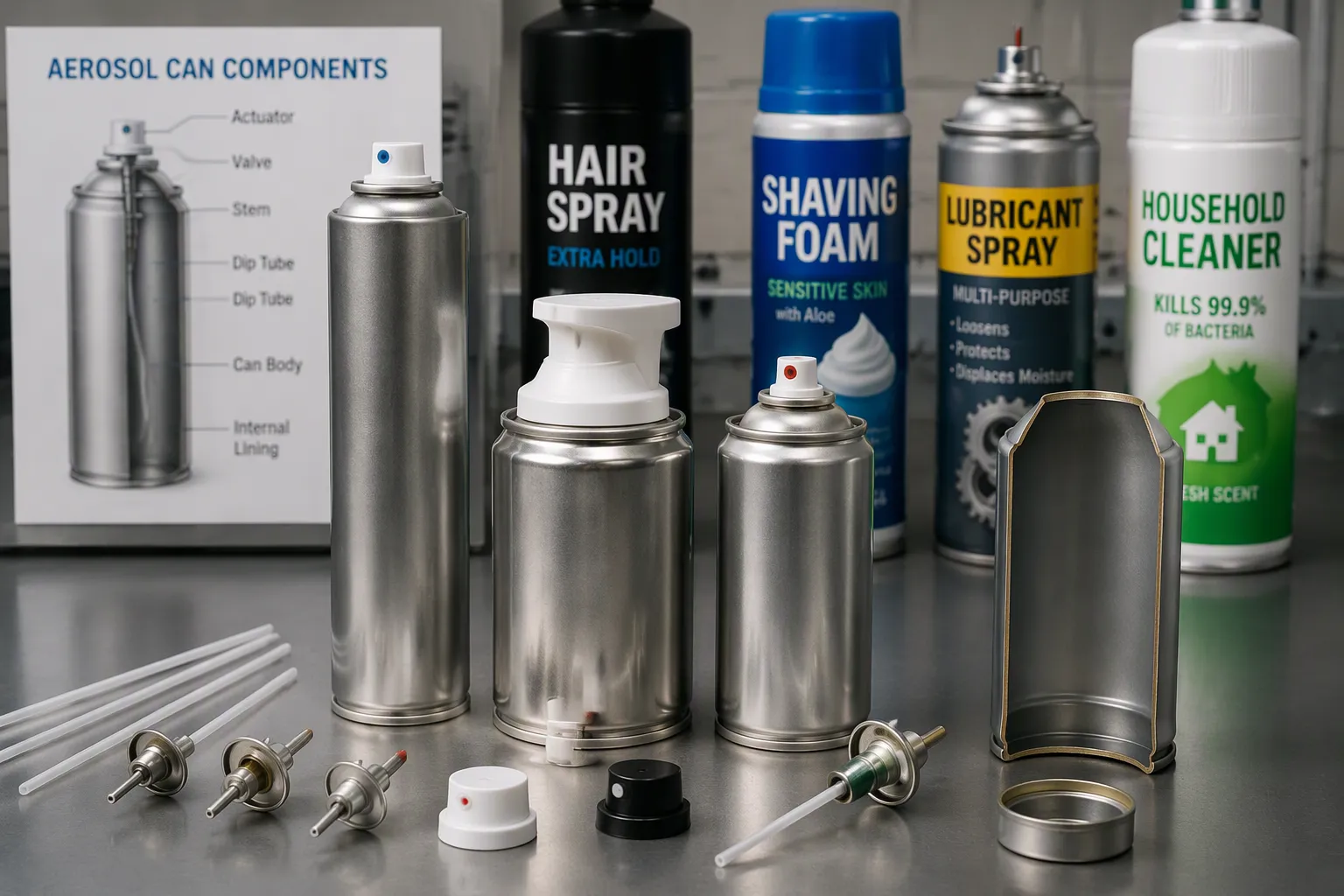
You will find aerosol cans across a wide range of personal care and household items. Hair spray, shaving foam, dry shampoo, and body mist all rely on consistent spray patterns and fine atomization. Air freshener demands a steady release rate for room-filling coverage. Whipped topping requires food-grade linings and bag-on-valve systems to separate product from propellant. Each application dictates specific valve types, can dimensions, and internal coatings. A shaving foam can needs a wide actuator for even foam delivery. A hair spray can requires a fine mist nozzle for uniform coverage. You must match these components to your formulation early in the design phase.
Household products often face aggressive chemicals. Oven cleaners, bathroom sprays, and furniture polish contain solvents that can corrode standard linings. You should select internal coatings that resist your specific formula. External coatings also matter for branding. A bright, durable label helps your product stand out on crowded shelves. Empty Aerosol Cans for personal care often use aluminum for a premium feel. Household lines frequently choose tin-plated steel for cost efficiency.
Industrial and Technical Uses
Industrial applications place heavy demands on can construction. Spray paint, lubricants, degreasers, and pesticides all require robust containers. The can must withstand the formula, not merely hold pressure initially. You need a metal body and internal coating that survive the product throughout its shelf life. The can body and internal coating deliver storage and chemical compatibility for the aerosol lubricant. Coating selection is part of engineering work to ensure the spray still points correctly after storage, shipping vibration, and repeated use.
Key Can Material Requirement
Supporting Detail
Withstand the lubricant formula
The metal can and internal coating must survive the formula, not merely hold pressure initially.
Provide storage and chemical compatibility
The can body and internal coating deliver storage and chemical compatibility for the aerosol lubricant.
Support long-term spray performance
The can coating selection is part of engineering work to ensure the spray still points correctly after storage, shipping vibration, and repeated use.
Technical users also demand precise spray rates and consistent output. You should verify valve compatibility with your chosen can dimensions. Industrial buyers often order in large volumes, so pallet efficiency and shipping weight affect total cost. Aerosol cans remain widely used across personal care, household, and industrial categories. Your application should guide every decision from material to valve to coating.
Cost Factors for Empty Aerosol Cans
Material, Printing, and Customization
Your unit cost starts with the base metal. Aluminum typically costs more than tin-plated steel, yet it delivers a lighter body and a premium feel. Tin-plated steel offers a durable, cost-effective path for industrial and household lines. The internal lining you select also shifts the price. Epoxy resins serve most cosmetics and household cleaners at a moderate cost. Phenolic coatings resist strong solvents and cost more. Specialized coatings such as PTFE push the price higher still.
Printing method and customization level drive the next cost layer. Screen printing, heat transfer, and offset printing each carry different setup charges and run rates. Offset printing supports 6–9 colors and suits large runs. Custom tooling for specialty formats adds upfront expense. For OEM ODM empty 100 ml aluminum aerosol cans, the minimum order quantity reaches 9,999 pieces for metal type, sealing type, and surface handling. That threshold applies to each customization category separately.
Shipping, Volume, and Lead Time
Order volume shapes your total landed cost. Larger runs spread fixed setup charges across more units and lower the per-can price. Necked-in cans stack more tightly than straight-walled cans, so they reduce freight weight and pallet space. Shipping distance adds fuel and handling fees. You should compare suppliers on total delivered cost, not unit price alone.
Lead time affects your cash flow and launch schedule. Custom printing and specialty tooling require longer production windows than standard stock cans. You can offset this by ordering standard sizes in bulk or by planning your campaign around realistic timelines. A clear forecast helps your supplier reserve capacity and avoid rush charges.
Standard vs. Custom: A Decision Guide
Valve Systems and Compatibility
You must verify valve compatibility before you place any order. The standard opening governs most aerosol cans on the market. This dimension determines which valves, actuators, and caps will fit your container. Measure the opening on your sample cans and compare it to your valve specification. A mismatch here will halt your filling line.
Standard valves work well for high-volume products with basic formulations. Air fresheners and simple household sprays fit this category. These valves are mass-produced, easy to source, and cost-effective. Custom valves serve a different purpose. Manufacturers precision-engineer them for specific spray angles, viscosities, or metered dosing. Cosmetics and pharmaceuticals often require this level of control. Your product performance depends on matching the valve to your formulation.
Personal care products benefit immensely from the precise application and product protection that aerosol containers provide. For items like facial mists, sunscreens, and deodorants, packaging aesthetics and actuator design become crucial considerations.
Eco-Friendly Options with SiHaiPack
Sustainability now shapes purchase decisions. According to the 2024 Voice of Consumer Survey, 46% of consumers are buying more sustainable products. This trend significantly influences personal care purchase decisions. You should factor recycling into your can selection.
Empty household aerosol cans are accepted in curbside recycling programs and at drop-off stations. Puncturing devices can fully empty and depressurize cans before recycling. Universal waste aerosol cans may be accumulated as per applicable regulations.
Material choice affects your environmental footprint. Recycled aluminum is 95% recyclable and generates 0.12 kg CO₂ per can. It is also BPA-free. Steel is 70% recyclable and generates 0.20 kg CO₂ per can, but it is not BPA-free. A hybrid metal mix reaches 80% recyclability and 0.16 kg CO₂ per can, with partial BPA-free status.
As an empty aerosol can manufacturer, SiHaiPack offers both standard and custom options to meet your sustainability goals. Custom-sized cans require custom dies and production line adjustments. Each customization adds development-phase costs. Minimum order quantities run higher than standard sizes. Per-unit prices rise at low volumes because setup, tooling, and printing plate costs spread over fewer units. Volume discounts are less favorable at low order quantities. Standard-sized cans use existing tooling and avoid custom setup costs. They carry lower minimum order quantities and lower per-unit prices. Volume discounts apply when orders exceed certain thresholds. The higher initial investment in custom cans may be offset by stronger shelf presence and brand differentiation.
Your selection of Empty Aerosol Cans depends on type, size, material, application fit, and total cost. Balance product requirements with budget constraints and branding goals for the best outcome. Evaluate reputable suppliers like SiHaiPack offering both standard and custom can solutions. Sustainability and customization trends continue shaping future packaging decisions.
FAQ
What sizes work best for travel products?
For carry-on travel, the TSA 3-1-1 rule limits aerosols to 3.4 oz (100 ml) per container, so choose cans of 100 ml or less.
Which material suits aggressive industrial formulas?
Tin-plated steel with a phenolic or specialized internal lining resists strong solvents. Aluminum works well for personal care, but it relies more on internal coatings for chemical protection.
Can you recycle empty aerosol cans at home?
Yes. Curbside programs and drop-off stations accept empty household aerosol cans. Puncturing devices fully empty and depressurize them before recycling.

 en
en ru
ru es
es pt
pt zh-CN
zh-CN